
OPT vs CPT Explained: A Student’s Guide to Work Authorization in the U.S.
Understand the key differences between OPT and CPT for F-1 visa holders - learn how to apply, maintain status, and make the most of your U.S. work authorization opportunities as a student.


When I first heard about OPT and CPT, I thought they were just two confusing acronyms in the F-1 visa rulebook. Everyone around me seemed to be stressing about them, and I had no idea which one I’d eventually need. Was CPT only for internships? Was OPT only after graduation? And what if I messed up the timing, would that ruin my chances of working in the U.S.?
That’s when I started digging, asking my DSO endless questions, and learning from other international students. What I realized is this: understanding OPT and CPT early on can make or break your student experience. So here’s my breakdown, in plain English, with real lessons I learned along the way.
Related Reads:
What is CPT (Curricular Practical Training)?
The first time I heard “CPT,” I was already thinking about landing an internship. Turns out, CPT is your ticket to work experience while you’re still in school.
Here’s what I learned about CPT:
It has to be directly related to your major.
You need your DSO’s approval and an updated I-20 before starting.
You can work part-time (up to 20 hours a week during the semester) or full-time during breaks.
Some programs even make CPT mandatory - think co-ops or internships tied to coursework.
*Pro tip I wish I knew earlier: If you do 12 months of full-time CPT, you may lose eligibility for OPT later. Always plan ahead!
What is OPT (Optional Practical Training)?
I didn’t really “get” OPT until I started thinking about life after graduation. I like to think of OPT as your ‘real-world pass’ - 12 months of work in the U.S. (and longer if you’re STEM).
Here’s what makes OPT different:
It can be used during or after your studies, but most students save it for post-graduation.
You need to apply through USCIS (not just your DSO), and the application process can take months.
Once approved, you get an EAD (Employment Authorization Document) - basically your work permit.
STEM majors can apply for a 24-month extension.
*Lesson from a classmate: Start your OPT application early. USCIS delays are real, and missing your window can cost you valuable work time.
OPT vs CPT: Key Differences I Wish Someone Told Me
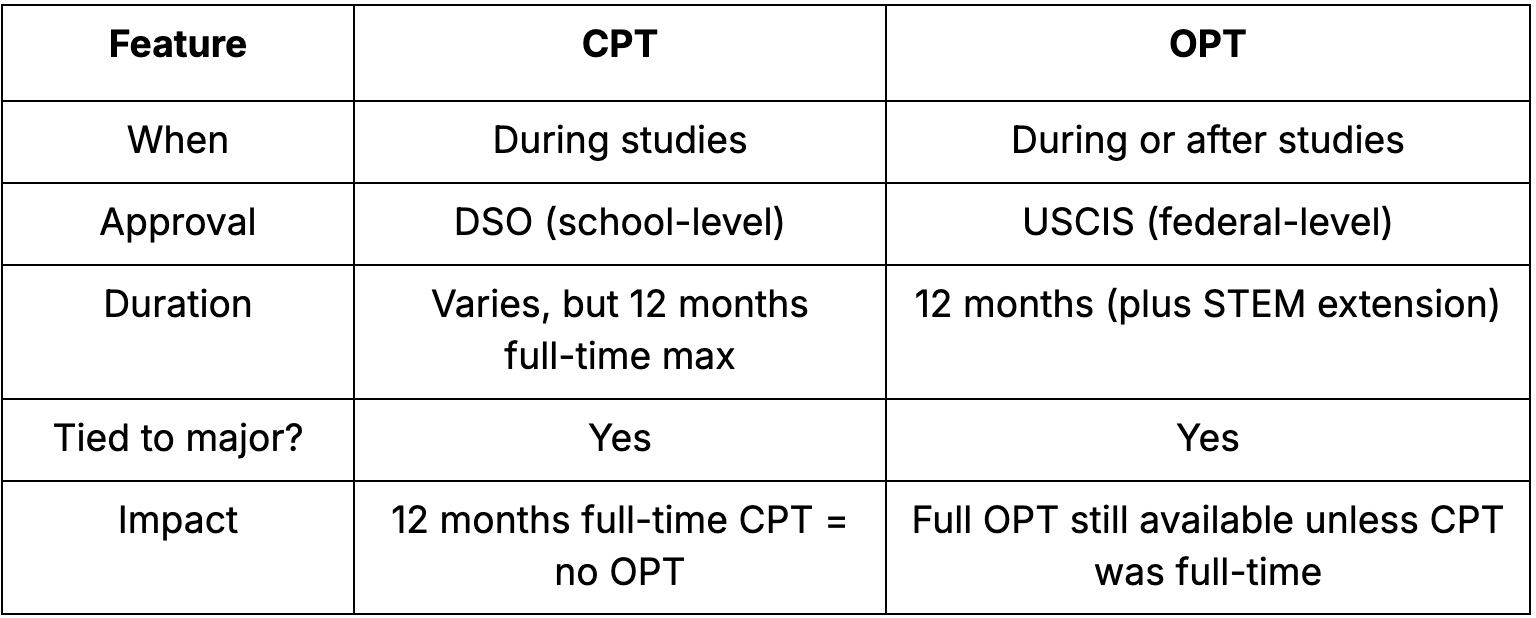
Now when new students ask me, here’s how I break it down: If you’re still studying and want an internship, CPT is usually the way to go. If you’re graduating and want full work experience, OPT is the path.

My Personal Take: Choosing Between OPT and CPT
For me, CPT was the first step, I used it to do an internship related to my major. It gave me hands-on experience while I was still studying, and it didn’t eat up my OPT eligibility since I kept it part-time. Later, when I was preparing for graduation, I applied for OPT so I could transition into full-time work.
It wasn’t always smooth, there were forms, deadlines, and plenty of confusion, but understanding the difference early helped me make smarter decisions.
Common Mistakes Students Make with OPT and CPT
Over time, I noticed a pattern of mistakes students (including me) almost made:
Starting work before authorization → Never do this, even by a day.
Waiting too long to apply for OPT → Processing can take 2–4 months.
Not realizing CPT can affect OPT eligibility → Full-time CPT eats into your future OPT.
Assuming unpaid work doesn’t need approval → Wrong! It still counts as “employment.”
Key Takeaway
OPT and CPT aren’t just acronyms, they’re opportunities. The earlier you understand the rules, the easier it is to plan your career in the U.S. Without stressing over deadlines, losing sleep, or risking your status.
That’s exactly why we built Student Succeed: to keep all these resources in one place, so international students can focus less on immigration paperwork and more on building their future.

Frequently Asked Questions
1. Can I do both CPT and OPT?
Yes, many students use CPT during school to gain internship experience and then OPT after graduation for full-time work. The key is balance, if you do 12 months of full-time CPT, you’ll lose your OPT eligibility. That’s why most students stick to part-time CPT during the semester and save OPT for after graduation. Think of CPT as your practice run and OPT as your big career launch.
2. Can unpaid internships count as CPT?
Yes, they do. Even if you’re not getting paid, U.S. immigration still considers it “employment” if the work relates to your major. That means you’ll need CPT approval from your DSO before starting, unpaid or not. I know students who skipped this step thinking it didn’t matter and it caused huge stress later. Better safe than sorry.
3. When should I apply for OPT?
You can apply up to 90 days before your graduation date, and trust me, the earlier the better. USCIS processing can take 2–4 months, sometimes longer, so waiting too long could leave you stuck without work authorization. I recommend marking your calendar months in advance and treating the application like a priority class assignment deadlines matter.
4. What if I’m a STEM student?
If your degree is in a STEM field, you may qualify for a 24-month OPT extension, which gives you up to three years of work experience in the U.S. This is huge because it buys you more time to build your career and potentially transition into an H-1B. The catch is that your employer must be E-Verify registered, so plan ahead and target companies that qualify.